« The Highest Standards for Greater Precision »
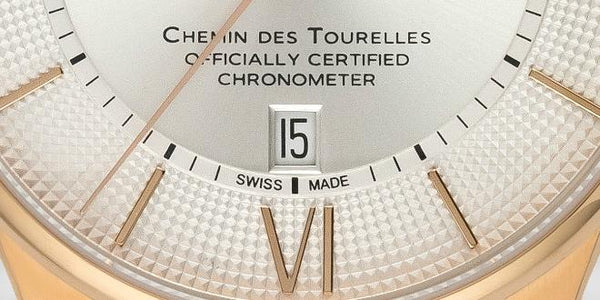
For more than two hundred years, the chronometer has been regarded as the epitome of an exceptionally accurate and reliable timepiece, and its qualities were tested in demanding procedures from early on. While the COSC chronometer certificate served as the industry's "gold standard" of chronometer testing for many decades, several manufacturers have recently developed their own certification processes with even stricter requirements. One example is Omega's Master Chronometer, which we introduce to our readers in this article.
John Arnold: Timepieces for Timekeeping and Navigation at Sea
The term chronometer, which today appears on the dials of numerous renowned watchmakers such as Rolex and Omega, was first used in the 18th century. Around 1780, the British watchmaker John Arnold (1736-1799) used it to describe particularly reliable timepieces intended for use aboard ships. Well into the 18th century, seafaring had suffered from the problem that a ship's current longitude could be determined only very imprecisely, if at all. The resulting shortcomings in navigation repeatedly led to the loss of ships and their crews, and on top of that, vessels often had to sail considerably longer routes than would actually have been necessary.
Just how urgently an emerging naval power needed to solve this problem is shown by the prize of £20,000 offered by the British Parliament in 1714. At the time, it was roughly equivalent to the value of twenty ships and was to be awarded to whoever first presented a satisfactory solution to the longitude problem. John Harrison (1693-1776), a carpenter who had also taught himself watchmaking, subsequently devoted himself intensively to building exceptionally accurate clocks for determining longitude. The timekeepers he developed did achieve the desired high accuracy and were successful in that respect, but they proved too expensive for practical use in larger numbers.
It was only John Arnold and Thomas Earnshaw who managed to simplify the design enough that this great precision could be offered at acceptable prices and produced in larger quantities.
It was not until around 1840 – more than 120 years after the prize was announced - that every ship in the Royal Navy was equipped with chronometers. Marine chronometers remained indispensable until the end of the Second World War, and only in the 1960s were they gradually displaced by the emerging quartz clocks.
Chronometer Testing and Chronometer Certificates
Because chronometers were of almost existential importance to ships' crews – and later to the crews of airships and aircraft as well – there was an early need for official testing and certification procedures. Initially, it was mainly observatories that tested the timekeeping accuracy of watches and issued corresponding certificates. Today, mechanical instruments play a role in navigation at most as backups, yet among enthusiasts of mechanical wristwatches it is still considered special proof of quality when a watch or movement has successfully passed chronometer testing.
That is why such tests continue to play an important role. In Switzerland, for example, a watch may only be called a chronometer if it has been tested by the official Swiss chronometer testing institute – the Contrôle Officiel Suisse des Chronomètres (COSC) – according to its standards and has achieved the required accuracy.
To this day, a COSC certificate is an aspect of marketing mechanical luxury watches that should not be underestimated.
In addition, since 2006 Germany has also had a testing institute, based in the observatory of the Wempe Chronometerwerke in Glashütte. Its accuracy requirements for mechanical watches correspond to those of the COSC, while somewhat different criteria apply to quartz watches. One difference from Swiss chronometer testing is that Glashütte tests not just movements but fully assembled watches, albeit in considerably smaller numbers overall than the COSC.
Rolex Superlative and Omega Master Chronometer
With the renaissance of mechanical wristwatches since the 1990s, more and more watchmakers used chronometer certification as a kind of external quality control, and its result – the chronometer certificate – proved to be an ideal marketing tool. But the more manufacturers had their movements certified, the less suitable the certificate became for setting themselves apart from the competition. Some of the top brands in the Swiss watch industry have therefore begun developing their own testing standards that go beyond the requirements of the official Swiss chronometer testing institute.
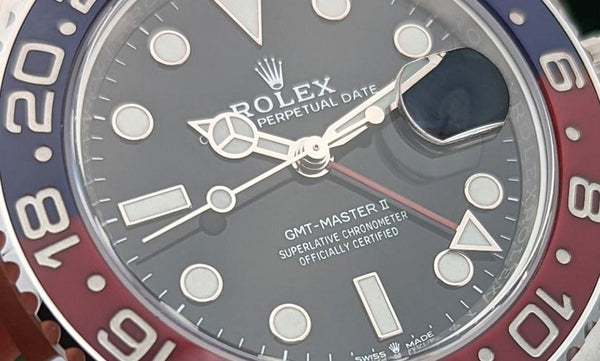
One example is the Grand Seiko Inspection Standard, introduced as early as 1960, under which selected movements from the Japanese manufacturer are tested for a total of 17 days in six positions and at two temperatures. Then, in 2015, Rolex and Omega – two renowned Swiss manufacturers often seen as direct rivals – each introduced their own chronometer standards. Since then, the dials of the Submariner, Datejust, Daytona & co. have proudly borne the inscription "Superlative Chronometer."


Nevertheless, all Rolex calibers continue to be tested by the COSC. To be classified as a Superlative Chronometer, however, the movements and the fully assembled watches must also pass a series of in-house tests with even stricter accuracy requirements. The manufacture also provides a special five-year warranty for these watches.


At Omega, the watches subjected to these especially demanding tests have since been called Master Chronometers. They are available in every collection. The certification is carried by numerous models in the Speedmaster and Seamaster series as well as the elegant Omega Constellation and De Ville lines!
Certified by METAS
The introduction of the "Master Chronometer" classification is closely linked to Omega's Co-Axial movements. The corresponding seal of approval is awarded not by the Swiss chronometer testing institute but by the Swiss Federal Institute of Metrology (METAS). Based in Wabern near Bern, the institute is Switzerland's federal center of expertise for all matters relating to measurement, measuring instruments, and measuring methods. It is responsible for enforcing the Swiss Measurement Act and works with the verification offices and the individual cantons and their verification officers.
To be certified as a Master Chronometer, a watch must pass eight tests of the functionality of both the movement and the watch – while exposed to magnetic fields of up to 15,000 gauss.
Within 24 hours, the watch may gain no more than five seconds. Unlike the COSC, METAS also tests in six rather than five positions and includes both the power reserve and the water resistance of the watch in its test series.


The first model to receive the Omega Master Chronometer designation was the Constellation Globemaster, whose in-house caliber 8900 achieves exceptionally high accuracy thanks to its Co-Axial escapement, silicon balance spring, and free-sprung fine regulation via balance weights. In addition, the use of non-magnetic movement components makes the stainless steel watch remarkably resistant to magnetic fields.
Omega's Target: 90 Percent Master Chronometers
Several versions of calibers 8700, 8800, 8900, and 9900 have now received the prestigious METAS Master Chronometer certificate, and many more are to follow. By 2019, Master Chronometers are expected to account for 90 percent of the watches produced by the Biel-based manufacture.
Incidentally, METAS certification is by no means reserved for Omega. Any other manufacturer can also have its watches certified as Master Chronometers according to the METAS standard.
The biggest hurdle is likely to be the strong magnetic field. After all, it was only five years ago that Omega's engineers and watchmakers were able to present the first movement that keeps running completely unaffected even in magnetic fields of up to 15,000 gauss.