« Precise Sand-Powered Gearing with the Potential for Crisis »
Precise, efficient and highly controversial: electronic movements spark heated debate in the watch world and transformed the industry like no other innovation of the 20th century. But how does a quartz movement actually work? We take a look behind the scenes of this ingenious micro-technology, explore its history and explain how it works in plain terms. Read on for everything you need to know about the quartz movement.
Simply Explained: The Basic Principle of a Quartz Movement
Most enthusiasts know how a mechanical movement works: energy is stored in a mainspring and transmitted through a gear train to the regulating organ (the "assortment"), which uses the escape wheel, balance wheel, hairspring and pallet fork to set the beat of the timepiece. The beauty of it is that a quartz movement works in essentially the same way – except that different components are used. Energy is no longer stored in a barrel but in a battery. A gear train still exists. And where the assortment ensures the correct beat of the seconds in a mechanical movement, quartz movements rely on a tiny crystal. This quartz crystal determines how much energy the battery may release to the gear train so that time is measured accurately. But how does a quartz movement work in detail? Before we answer that question, let's first get to the bottom of how the electronic system came about.

From the Lab to the Wrist: The Origins of the Quartz Watch
That story begins earlier than you might expect – in the 1920s, to be precise. At the time, the quartz movement was not designed for wristwatches at all, but was used in the form of huge apparatus in American laboratories. The breakthrough came from New York inventors Joseph W. Horton and Warren Alvin Marrison, who unveiled the world's first quartz clock in 1927. It was already many times more precise than the mechanical movements of the day, but suffered from extreme fluctuations in accuracy depending on temperature. Yet news of the new invention spread around the globe like wildfire and led to enormous technical progress. In 1932, researchers Adolf Scheibe and Udo Adelsberger in Berlin used constant temperatures to achieve an average daily rate deviation of just 0.002 seconds. A milestone in timekeeping. In 1938, the first commercially available quartz clock for industry and science appeared.

In the postwar period, quartz clocks replaced the previously widespread precision pendulum clocks as the scientific standard and were rapidly refined into more compact designs. Of all companies, it was the prestigious Geneva manufacture Patek Philippe, renowned for its exquisite mechanical movements, that made decisive contributions here. In 1960, it launched the "Chronotome," the first portable quartz timepiece. At the time, the electronic technology was incredibly expensive and made even the finest mechanical watches from Rolex, Omega and the like seem affordable. It wasn't until 1969 that Seiko succeeded in building the world's first production-ready quartz wristwatch, the Astron.


How Does a Quartz Movement Work in Detail?
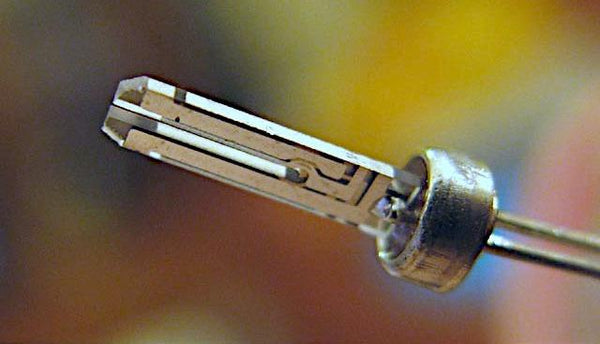
A look at the complexity of the technology reveals why perfecting it in miniature took decades. Remember: the quartz crystal regulates how much energy is passed from the battery to the gear train. But the fork-shaped crystal can't do this on its own: between it and the battery sits a stepper motor, which combines the pulses from the quartz crystal with the battery's energy and delivers the latter to the gear train in a controlled manner. The crystal owes its ability to generate pulses in the first place to the piezoelectric effect. This effect, which we all know from the piezo igniter on a gas grill, means that certain metals and crystals change shape when subjected to an electrical voltage.

In technical terms, such a deformation is called an "oscillation." How fast these oscillations occur depends on the size and shape of the crystal and determines how many pulses per second are passed from the battery to the stepper motor and ultimately to the gear train. Naturally, we want exactly one pulse per second, so that the seconds hand ticks precisely once every second. To make the quartz movement do exactly that, the entire industry has agreed on a standard value of 32,768 oscillations of the quartz crystal per second. Pretty fast for such a tiny tuning fork.
[box type="info" align="" class="" width=""]By the way: although the movement takes its name from the mineral of the same name, the quartz crystal is usually produced synthetically. The raw material is often so-called quartz sand, which is mined in large quantities in Germany. The industrial process ensures that the quartz sand is brought into the perfect shape to perform its timekeeping function flawlessly.[/box]The Quartz Crisis: Mechanical Watches on the Brink
Even in their wildest dreams, inventors Joseph W. Horton and Warren Alvin Marrison could hardly have imagined how dramatically their technology would change the watch world. After Seiko launched the first quartz wristwatch in 1969, a veritable storm of revolution swept through the industry: in 1970, Junghans introduced the Astro-Quartz, the first German quartz wristwatch, followed by the legendary Hamilton Pulsar in 1972. With a retail price of over $2,000, it cost more than many a car of its day. But over the course of the 1970s, quartz technology became so affordable that anyone could own it, and for many people mechanical watches lost their reason to exist.

Because quartz was far more precise, considerably cheaper and often much more reliable than mechanical movements, sales of traditional timepieces collapsed dramatically. By the end of the quartz crisis in the mid-1980s, many traditional brands had gone bankrupt, and thousands of jobs in the conventional watch industry had been cut.


From Bargains to Luxury Quartz Watches: Today's Range Is Huge
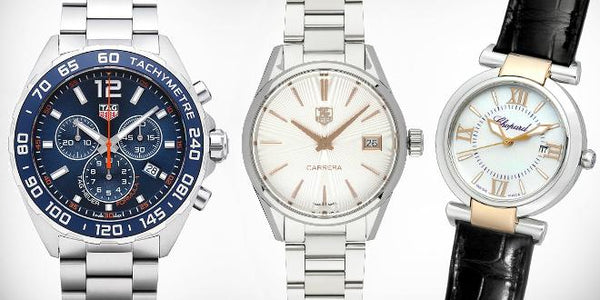
We have to admit: although we are passionate fans of mechanical movements, the speed and accuracy of the quartz movement hold a certain fascination for us. If you want to experience the unbeatable precision of electronic timekeeping, you'll find options in every price range: while the traditional Swiss brand Tissot offers high-quality quartz watches from its T-Classic and T-Trend collections for under €200, TAG Heuer specializes in premium quartz watches with powerful chronograph functions. The sporty Formula 1 collection and the TAG Heuer Aquaracer are outstanding examples of the brand's quartz expertise. If you're after something more affordable, the top brands Hamilton, Junghans and Longines are, alongside Tissot, strong favorites of our magazine.


If you want to discover electronic technology at its most exclusive, top brands such as Omega and Breitling offer a spectacular selection of luxury quartz watches. The latter take electronic timekeeping to the extreme, with exceptional temperature resistance, long battery life and even higher precision than regular quartz movements. This shows that quartz doesn't have to be cheap. The technology has every right to a place in the luxury segment.