« Tracing the Origins of Time »
It governs our entire day and is what makes modern civilization possible in the first place: precise time. Even more than the steam engine, it paved the way for a connected globe and made possible a daily life of flights, rail travel and TV schedules. But who actually invented time as we tell it? Let's travel from the first ideas of antiquity through the ingenious inventions of the Middle Ages to the birth of today's watch brands to get to the bottom of the mystery of time.
Meet Me at Dusk: Telling Time in Antiquity
Imagine for a moment that there were no clocks. How would we organize our day? A look at the ancient Greeks, Romans and Babylonians offers some simple answers. Get up at sunrise, go to bed when darkness falls. And appointments? Either you met at cockcrow or you agreed on a rough position of the sun to fix the time.

What sounds rudimentary reflected the everyday life of ordinary citizens, but not the state of science. People in antiquity already divided their day into two sets of twelve hours, yet depending on the season, these solar hours varied in length. The farther north you went, the greater the discrepancies. A second problem: the sundials and water clocks of the time were complicated to build and imprecise, which is why they were irrelevant to most of society. As a result, there was no strict structure to daily life – work was paid by the "day," and long delays were the norm at any kind of meeting.

Monastic Orders: Pioneers of the Clockwork
For centuries, there was no incentive to seriously change this way of life. Precise times were irrelevant to most private individuals and trades. Not so for the monks of the early Middle Ages: bound to observe their hours of prayer, they developed various makeshift ways of keeping time by the end of the 13th century. Burning candles, for example, precisely weighed and marked along the side, served as timekeepers. Nails stuck into the wax, which fell out and made a sound as the candle burned down, also shaped the early history of timekeeping in Europe's monasteries.

Today we don't know exactly who invented precise timekeeping or in what year. The breakthrough must have come between 1270 and 1300 with the development of the first escapement, which plays a major role in the history of the clock. After all, mechanical clocks had existed much longer: in antiquity, people already understood the basic principle of displaying the time using a weight on a rope, gears for transmission and a motion work. Early water clocks in Roman and Greek history, for example, already showed the time by means of indicating mechanisms.

The Escapement: A Milestone in the History of Timekeeping
The key problem with these early clocks was their unregulated weight drive. Once the system is set in motion, the weight falls faster and faster, making even timekeeping impossible. Only the invention of the escapement provided the crucial trick: a toothed wheel is mounted on the arbor carrying the weight, and two metal tongues attached to a verge (the "pallets") engage with it at regular intervals. As this happens, the verge swings back and forth. At the same time, the pull of the weight acts on the wheel, and every time a pallet releases it, it produces a short jolt forward – the ticking of the clockwork.

The earliest records of an escapement date to around 1300. Over the course of the 14th century, the innovation spread rapidly and changed everyday life dramatically. Found at first in wealthy monasteries and great cathedrals, clockworks with escapements made equal hours possible for the first time. The "hour" as we understand it today was invented, and the modern history of timekeeping began. So the question "How long have clocks existed?" has two answers: if you count sundials, it's antiquity; if you mean precise, uniform timekeepers, it's the 14th century. By 1400, these complex clocks – extremely expensive by the standards of the day – were becoming increasingly widespread, first in large cities, then in smaller towns. The luxury timepiece of the Middle Ages may have hung on a church tower rather than on the wrist, but like today's models from Rolex, Omega and Breitling, it carried great prestige.

Europe's Catapult into the Modern Age
Timekeeping and its history are inseparably linked to Europe's leap from "backward" continent to the spearhead of global technology. While China and the Islamic world were considered the most innovative civilizations until the Middle Ages, "primitive" Europe gradually grew into that role along with the history of time. By the Renaissance at the latest, the epicenter of architectural, scientific and artistic progress had shifted to our home continent – fueled by the new, precise time. How strongly timekeeping has shaped our history is hard to put into words: time measurement brought an entirely new spirit of innovation to the backward Middle Ages, hostile to any kind of change, and triggered hundreds of further advances. Where new inventions had once been considered devilish because they did not appear in the Bible, people were now crazy about progress in every science. The history of time is the history of our modern life.

From Bell Clock to Pocket Watch: The Dream of Portable Time
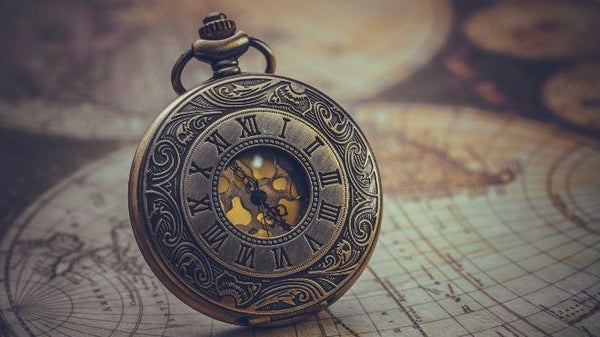
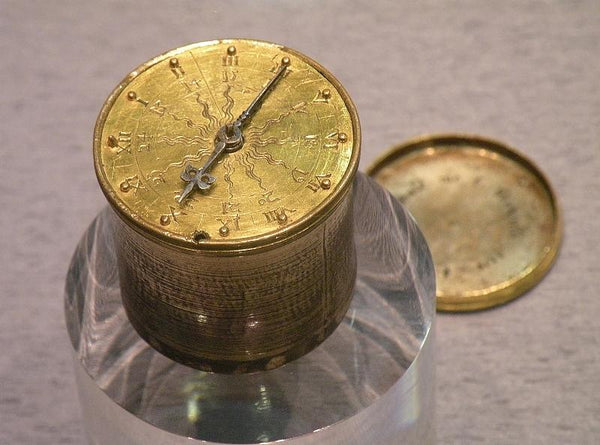
Once precise time had been achieved in stationary clocks, the desire for portable timepieces grew steadily – whether on ships, on long carriage journeys or out for a stroll. The first famous pocket watches were developed in the early 16th century by Nuremberg clockmaker Peter Henlein, back then still in cylindrical and the famous pomander shape. In the 17th century, minute hands appeared alongside hour hands for the first time, putting the increasing accuracy of the mechanics to practical use. Watches became ever slimmer, more compact and more practical. Only in the 18th century were the first luxury brands founded, which still shape our fascination with portable time today.

The world's oldest watch brand, Blancpain, was born in 1735 in the small Swiss village of Villeret. The company would remain in family hands for almost 200 years and decisively shaped the development and history of slim pocket watches and wristwatches alike.

The modern history of the watch got its big start with the industrialization of the 19th century, during which many of the most prominent manufacturers were founded: Omega, Longines, Breitling, Audemars Piguet and other top brands will continue to play a decisive role in shaping the history of time.