« A Swiss Watch at 60 Percent »
Swiss watches enjoy an outstanding reputation worldwide, and to this day numerous leading luxury watchmakers are headquartered and manufacture there. The "Swiss Made" mark of origin rightly carries great prestige, which brings manufacturers tangible economic benefits. So it is hardly surprising that Swiss watchmakers have a strong interest in ensuring that the conditions for using this mark of origin are not watered down. Accordingly, the so-called "Swissness law" is the subject of lively debate.
What Is the "Swissness Law"?
The high prestige that many consumers around the world associate with Swiss origin has very concrete economic consequences for manufacturers. Products bearing labels such as "Swiss Made," "Produit Suisse," or similar designations often command higher prices than comparable products with no indication of origin or a different one.


This is especially evident in the watch market, where Swiss watches – compared with watches of similar quality from elsewhere – can be sold at significant markups. The achievable price premiums range from roughly 20 percent to 50 percent. That gives watch brands a strong incentive to bring their products to market with such a label and to protect it. To prevent this prestigious designation of origin from being devalued by inferior products and an inflationary use of "Swiss Watch" and similar terms, the Swiss Federal Council issued an ordinance in December 1971. It established for the first time the conditions under which a watch may be called a Swiss watch and bear a corresponding indication of origin.
Since then, there have been several initiatives to amend and tighten these provisions, championed in particular by the Federation of the Swiss Watch Industry FH, founded in 1982. The latest version of the Swissness law came into force on January 1, 2017.
One of the Most Prestigious Labels of Origin in the World
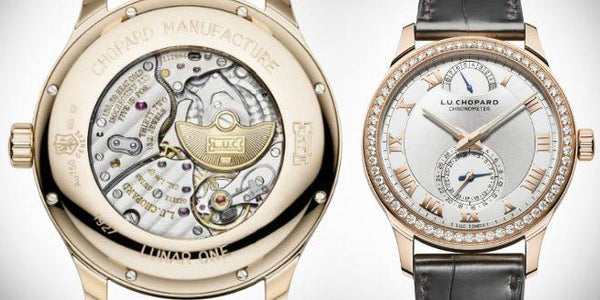
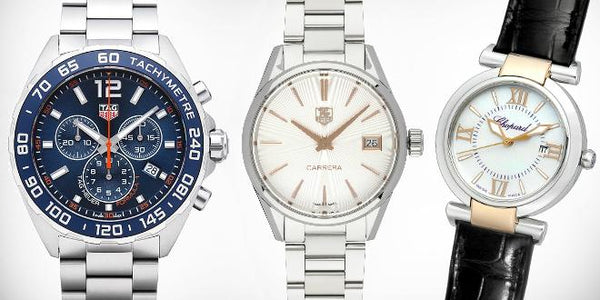
The significance of the "Swiss Made" label, which has appeared for decades on Rolex watches, Omega watches, and Chopard watches, is demonstrated, among other things, by the results of an international market research study published in March 2017. The study examined the popularity of products from various countries and the reputation of their respective labels of origin. A total of around 43,000 consumers in 53 countries were surveyed, and their answers formed the basis of the so-called "Made-in-Country Index."
The "Made in Germany" label took first place, closely followed by "Swiss Made" and "Made in EU" in second and third place, respectively.
By comparison, the United States, the world's largest economy, came in only eighth, trailing the United Kingdom, Sweden, Canada, Italy, Japan, and France. Respondents could rate countries in different categories. Germany stood out particularly in quality and safety standards, while Switzerland scored especially well in status symbol and authenticity. Italy excelled in design, while Japan was associated above all with cutting-edge technology.

The Epitome of High-Quality Watches
It is certainly no coincidence that the Swiss label of origin received high ratings above all in the status symbol and authenticity categories. Alongside quality and precision, these two aspects matter a great deal to many buyers of luxury watches. And fine timepieces, in turn, are among Switzerland's most important and best-known exports.
Wearing a "Swiss Watch" on your wrist has long been a status symbol well beyond Europe and North America, one that signals a sense of style and an appreciation of quality.
Interestingly, the "Swiss Made" label itself goes back to a concession made to the Swiss watch industry. Given the languages spoken in Switzerland, it would have been natural to use designations such as "Fabriqué en Suisse" or "Hergestellt in der Schweiz," some of which can be found on other products. And the equivalent of the internationally common English indications of origin would actually have been "Made in Switzerland."
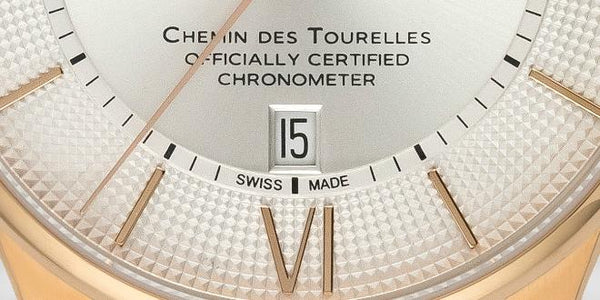
 However, because of their length and multiple spaces, these designations would have been harder to fit on watch dials. That is why the relatively short two-word version "Swiss Made" was chosen to mark Swiss watches, as it fits easily on any dial.
It is usually found at six o'clock, relatively far out on the lower edge of the dial. The word "Swiss" is typically placed between seven and six, and the word "Made" in the corresponding position between six and five. This creates a harmonious, symmetrical look.
The Road to the Latest Swissness Law and the Controversy over the 60 Percent Rule
As early as 2007, the Federation of the Swiss Watch Industry FH resolved at its general assembly to submit a bill to the Swiss Federal Council. It was intended to significantly raise the requirements for a "Swiss Made Watch." The aim was that at least 80 percent of the production costs of mechanical watches would have to be incurred in Switzerland. For electronic models, the figure was to be at least 60 percent. A further requirement was that the development and prototyping of the watch in question would have to take place in Switzerland. In 2013, the Federal Council passed a law based on this proposal, which, however, requires a minimum of only 60 percent of manufacturing costs to be incurred in Switzerland and came into force at the start of 2017.


Monitoring compliance with these rules is the responsibility of the Swiss Federal Institute of Intellectual Property (IPI). Violations can lead to cease-and-desist warnings or even criminal complaints. The 60 percent required by the Swissness law applies both to the manufacturing costs of the watch as a whole and to the manufacturing costs of the movement. In addition, at least 50 percent of the movement's value must come from components made in Switzerland. Raising the minimum share of manufacturing costs from 50 to 60 percent is in fact a less drastic tightening of the requirements for a genuine Swiss watch than it might seem at first glance. Unlike under the previous rules, development costs may now also be included when calculating the share.


Industry representatives who consider the new Swissness law problematic argue above all that it misses its main objective. The new rules were meant to counter manufacturers who try to cash in on the price premiums of Swiss watches with as little effort as possible by relocating large parts of production abroad – mostly to the Far East. Yet in the view of its critics, the new Swissness law fulfills precisely this purpose only inadequately.
Can the Swissness Law Strengthen the Position of the Swiss Watch on the International Market?
The extent to which the Swissness law lives up to the hopes placed in it, and how well the new rules will be accepted within the industry, will probably only become clear over the course of several years. It is just as obvious that manufacturers focused on mass production for the lower price segment would prefer less stringent requirements as it is that makers of "genuine" Swiss wristwatches want to protect themselves from this competition with the highest possible hurdles.
When the Swatch was being developed, Nicolas Hayek already had a "100 percent Swiss Made watch" in mind. For this, he was criticized and in some cases even ridiculed by many industry figures, marketing experts, and management consultants of the day. But in the end, success proved him right. The Swatch was inexpensive, made largely of plastic, and consisted of as few individual parts as possible – but for all that, it was a genuine Swiss watch. And its market success contributed significantly to the rise of the Swatch Group and to overcoming the so-called quartz crisis in the Swiss watch industry.
More Than the Swissness Law Requires – Smaller Brands in Particular Bet on the 100 Percent Swiss Watch
Today, too, some makers of Swiss watches – especially smaller brands and newcomers – try to set themselves apart by exceeding the requirements of the Swissness law. Simon Husslein and Pierre Nobs, for example, promote their still very young watch brand Bólido as "100 percent Swiss Made." And the watch brand Marcel Bouvier publicly criticizes on its website the current legal criteria for designating Swiss watches, which it considers ridiculously lenient.
Despite only a "laughable Swiss added value" resulting from the extensive use of parts produced abroad, a watch can be certified as "Swiss Made" under the current Swissness law as long as its movement is Swiss and its assembly and final inspection are carried out in Switzerland.
By contrast, Marcel Bouvier says it decided to design watches in which the Swiss share of added value amounts to at least 85 percent. In the medium term, the brand intends to offer masterpieces made 100 percent in Switzerland. However, the situation is not always as clear-cut as you might assume at first glance.

Tag Heuer, for instance, is undoubtedly one of the most renowned makers of Swiss watches. And naturally, the company would also like to market its Tag Heuer Connected smartwatch as a Swiss Made watch. But this raises the question of how the value of the software and electronic components used compares with that of the "watch hardware" made in Switzerland. The Swissness law is therefore likely to keep fueling debate – and further modifications in one direction or the other are by no means out of the question.