« Watch Brands for Every Segment »
At first glance, affordable, colorful plastic watches and mechanical luxury watches from storied Swiss brands such as Breguet or Blancpain may not seem to have much in common. And yet they come from one and the same group, which also plays a central role in the Swiss watch industry. In this article, we take a look at a company that made a decisive contribution to overcoming the "quartz crisis" in Switzerland and has written an impressive success story that continues to this day.
Global Group and Monument to a Rebirth
The Swatch Group SA – its official company name – is today a globally active group with numerous subsidiaries, specializing in the production and sale of watches, movements and other watch components, as well as jewelry. In addition, the company supplies the watch industry and other sectors with electronic systems and their components. Annual revenue most recently exceeded eight billion Swiss francs.
Compared with the roughly tenfold annual revenue of a company like Nestlé, this may not seem like all that much, but for a company operating exclusively in the watch industry, it is a more than considerable figure that reflects an extremely solid market position.
To understand this success, you have to set aside some supposed principles of marketing and business administration. For decades, leading marketing experts repeatedly advised companies to pursue either cost leadership or quality leadership – that is, to focus either on mass-market goods that are cheap to produce or on high-priced quality products. Strategies positioned between these two options were considered potentially problematic and unlikely to succeed.


The Swatch Group, however, has demonstrated that it is entirely possible to offer watch brands for virtually every market and price segment, thereby uniting both strategies under one corporate roof without compromising the image of the group's individual brands. A look at the origins of this group is also a look at a difficult yet highly fascinating chapter in Swiss watchmaking history – and, without exaggeration, at the rebirth of an entire industry.
The Road to Today's Group Structure
The Swatch Group emerged in 1983 from the merger of two large Swiss watch companies. At that time, the Allgemeine Schweizerische Uhrenindustrie AG (ASUAG), founded in 1931, and the Société Suisse de l'Industrie Horlogère (SSIH), in existence since 1930, joined forces to form the Schweizerische Gesellschaft für Mikroelektronik und Uhrenindustrie AG (SMH). By then, the Swiss watch industry had gone through a severe crisis that went down in history as the "quartz crisis," triggered by the growing flood of cheap watches from the Far East. The SMH project was driven forward above all by Nicolas George Hayek Sr., together with Stephan Schmidheiny as the largest investor.
While Hayek, with his at times highly unconventional and bold ideas, grew into the role of savior of the Swiss watch industry, Schmidheiny deserves credit for trusting him and securing the financial foundation needed to rebuild the group. Hayek had already been working as a strategic consultant for SSIH since 1980 and for ASUAG since 1982.


In the course of merging the two companies into SMH, he had developed a strategy for the new company that included, among other things, the concept of a high-quality electronic watch – downright revolutionary by Swiss standards of the time.
Success Arrives – Despite All the Skeptics
At the time, this concept was viewed with great skepticism by many influential industry figures in Switzerland, but it ultimately proved to be a decisive factor in the group's success. In 1983, Hayek established the now world-famous Swatch brand for the new watches. To the surprise of many skeptics, Swatch watches met with a very positive response in the market and became a commercial success for SMH. The latter was due above all to the fact that Hayek and his team had kept a close eye on production costs from the very beginning. Their watches were designed so that they could be assembled from just 51 standardized parts, with the movement sealed into an injection-molded plastic case.
By comparison, producing a conventional quartz watch at the time required roughly three times as many individual parts.
Swatch watches retailed at between 80 and 100 Swiss francs, making them fully competitive with Asian products. The new brand name Swatch evolved in several stages from predecessors such as Second Watch, Swiss Watch and S-Watch. The watches were first marketed in the USA, which offered a large and receptive domestic market. By 1984, sales had already reached 800,000 units. SMH continuously launched new collections designed by a variety of artists.


Roughly a decade later, in 1994, Swiss watches held a 53 percent share of the global market. As recently as the early 1980s, hardly anyone would have thought such a result possible, and without Swatch watches it would probably not have been achievable.
Successfully Repositioning Storied Watch Brands
Despite the new label's enormous commercial success, Hayek did not focus solely on the segment of affordable watches that could be produced in large numbers. He devoted himself just as energetically to repositioning storied Swiss watch brands that enjoyed a good reputation but had in some cases run into financial difficulties as a result of the quartz crisis.
From the outset, he made a point of sharpening each brand's individual profile and giving every brand its own distinct market presence.
The portfolio of brands that Hayek successfully repositioned over the years – and in some cases quite literally "revived" – has grown to a considerable size and includes genuine luxury watches as well as Swiss quality watches positioned more in the mid-price segment or suited as "entry-level watches" for young enthusiasts on their way into the luxury segment.


In 1992, SMH acquired Blancpain, presumably the oldest wristwatch brand in the world, and in 1999 it was followed by Breguet, another prestige brand whose roots go back to the 18th century. In 1998, SMH changed its name and has since been called The Swatch Group AG, even though watches bearing that name, strictly speaking, make up only part of its product portfolio.

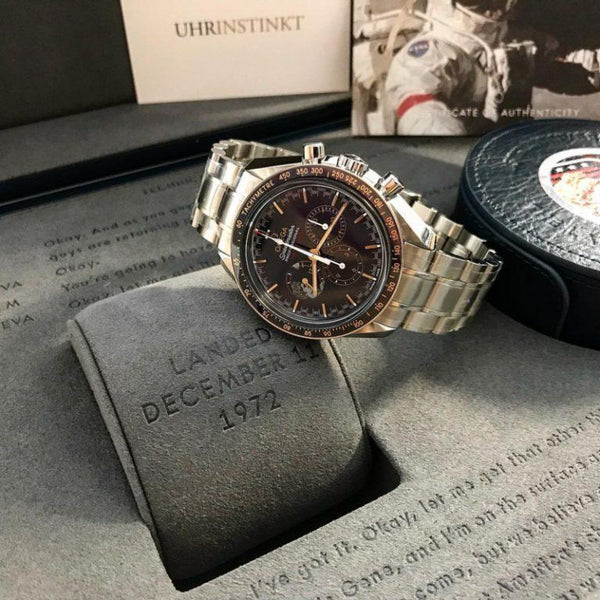
Alongside Breguet and Blancpain, the group's brand portfolio today also includes such illustrious names as Certina, Hamilton, Longines, Omega, Rado and Tissot. Since acquiring Glashütter Uhrenbetrieb GmbH and its storied Glashütte Original brand in 2000, the Swatch Group has been represented by a prominent brand not only in Switzerland but also in Glashütte, the world-renowned watchmaking town in Saxony.


The integration of Glashütte Original into the group was not, however, the first point of contact between the two companies: alongside its in-house calibers, Glashütte had previously also used movements from the Swatch Group subsidiary ETA.
The Swatch Group's Current Brand and Product Portfolio
In addition to the watches that gave the group its name, the Swatch Group portfolio today comprises 17 further watch brands. Swatch and the children's watch brand Flik Flak form the basic segment. The group covers the mid-price segment with six brands: Balmain, Calvin Klein, Certina, Hamilton, Mido and Tissot. The three brands Longines, Rado and Union Glashütte are assigned to the upper price segment. In the prestige and luxury segment, the group today owns a total of seven different brands: Blancpain, Breguet, Glashütte Original, Harry Winston, Jaquet Droz, Léon Hatot and Omega.


Numerous other subsidiaries supply both the group's own brands and outside brands with movements and a wide range of components – from straps and bracelets, pushers and crowns, cases and crystals to hands and dials. The product range of this remarkably diverse watch group is rounded out by a number of suppliers of electronic components, chips, sensors, batteries and quartz crystals.