« Where Time Lives »
For centuries, Switzerland and Germany have been regarded as the home of fine watches. Their watchmakers have made an outstanding contribution to the craft of watchmaking and to the development of horological innovations. But what lies at the root of this tradition, and where are the "epicenters" of exclusive luxury watch manufacturing? Join us on a journey across the map of time.
For many years, Swiss watch brands in particular were synonymous with handcrafted luxury, and many of these long-established houses are based in the area around Geneva. After German reunification, however, German manufactures and their technical innovations and refinements also gained much wider recognition around the world. Today, both Swiss and German manufactures rank among the leading makers of fine luxury watches, putting not only the Alps but also the Black Forest and the Ore Mountains in the spotlight.

Traditions That Live On
Where life moves at a somewhat "slower" pace, the traditional watch brands were better able to flourish. Both German and Swiss watch brands originated in sparsely populated regions such as the Swiss Jura, the Black Forest, and the Ore Mountains. The great watchmaking schools settled there early on, not only training the next generation but also continually exploring new and innovative technologies. Industrial mass production never took hold in these regions, so the fragmented, workshop-based production within the manufactures survived in some cases for centuries. That is why, to this day, fine luxury watches are of course not made on an assembly line but crafted largely by hand in small, independent manufactures, sometimes over the course of months.

As people gradually came to appreciate again, after the quartz crisis, the mechanical treasure contained in handcrafted German and Swiss movements, the manufactures of the well-known watch brands were able to operate profitably once more, pass on their knowledge, and advance the art of watchmaking.
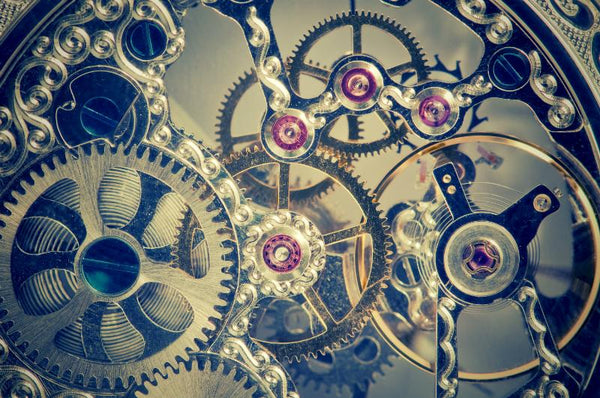
The small traditional workshops, with their high added value and expertise, are indispensable for producing fine luxury watches. Precisely crafted and fitted with unique components, these watches owe their high quality and reliability to the exceptional skill of the watchmakers employed there, across all the well-known brands.

Swiss Made in the Swiss Jura
Much has already been said and written about the inventions and achievements of watchmakers, such as Abraham Louis Breguet, inventor of the tourbillon, or Adrien Philippe, inventor of the winding crown. Even Jean-Jacques Rousseau, who grew up in the Jura as a child, had to complete an apprenticeship as a "Graveur pour l'Horlogerie" before he could escape his strict master and become a philosopher. As early as the 18th century, master watchmakers were described as artists, and the workers employed there were long regarded as the aristocrats of the working class. In 1830, making a watch required just over 50 operations; forty years later, it took twice as many. To this day, every watchmaker sits quietly on a stool while assembling these handcrafted luxury watches, loupe clamped in one eye, working patiently with an exceptionally steady hand. A careless tremor, a hasty movement, or any kind of rush is poison to this process and could undo all the meticulous work done up to that point.

In all, the manufactures have weathered three major crises to date: American mass production, which pushed into the European market from the 1870s onward; the global economic crisis at the end of World War I; and the quartz crisis, which began in the late 1970s. Yet so far, the mystique of Swiss watch brands has prevailed time and again.

Geneva: From Jewelers and Goldsmiths to Watchmakers
Until the middle of the 16th century, Geneva was famous for its jewelers and goldsmiths. The turn toward watchmaking was ushered in, of all people, by the reformer John Calvin, who urged these guilds to devote themselves to this craft rather than indulge in vanity. With the help of the Huguenots who had fled France, many of whom were watchmakers, Geneva became a stronghold of watch production even at that time and steadily expanded this position. Switzerland's first observatory was also established here. Today, Geneva not only hosts one of the two major watch fairs, the SIHH, but is also home to watch brands such as Rolex and Patek Philippe, as well as horological museums and the Académie Horlogère des Créateurs Indépendants.

By the second half of the 18th century at the latest, the know-how of the former Geneva watchmakers' guild spread from Geneva and soon benefited all of eastern Switzerland. Watch manufactures facing rising production costs in Geneva, along with unwelcome guild regulations, moved out to the surrounding countryside. In their search for alternatives, Geneva's merchants founded veritable watchmaking centers in villages that grew into thriving small towns. Biel (home of Omega, Rolex movements, and Maurice Lacroix), Le Locle (Tissot, Ulysse Nardin, Zenith), La Chaux-de-Fonds (Ebel, Girard-Perregaux, TAG Heuer), and Grenchen (Fortis, Breitling), for example, are among the most important places in watchmaking and the birthplace of exclusive brands, valuable patents, and countless innovations in mechanical watchmaking.


The Black Forest: Beyond Cuckoo Clocks, Home of Junghans Luxury Watches
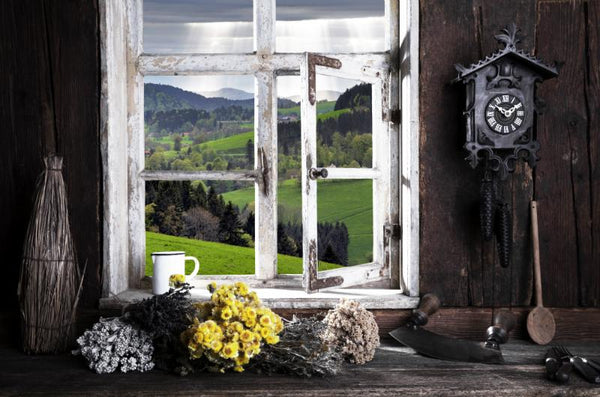
Germany's Black Forest is not only an idyllic getaway where the world-famous and much-loved cuckoo clocks tell of a watchmaking tradition cultivated over centuries; it is also home to what was once the world's largest watch manufacturer. Junghans is one of the world's most renowned watch brands and delights watch enthusiasts with a broad portfolio of products. Radio-controlled and solar watches are just as much part of its repertoire as the coveted mechanical chronographs from the Meister Chronoscope and Meister Telemeter lines. The Max Bill and Erhard Junghans collections hold a special place, paying homage to the clean lines of the Bauhaus era and to the company's founder, respectively. Alongside these mechanical luxury watches, the German manufacturer also offers numerous models with quartz movements.


Glashütte: Germany's Counterpart to the Swiss Jura
What the valleys of the Swiss Jura are to Swiss watches, Saxon Switzerland is to the German manufactures. In Glashütte, the German School of Watchmaking not only trained the finest watchmakers; they also found suitable employment right next door in the watch industry. Since German reunification, A. Lange & Söhne, Union Glashütte, Nomos Glashütte, and other watch manufactures have built an international reputation.


The collections of the Glashütte Original manufacture, for example, have been setting new standards ever since. These include the swan-neck fine adjustment, the patented Panorama Date, and the three-quarter plate with Glashütte stripe finish. Collections featuring carefully chosen technical refinements win over passionate enthusiasts with their complications, such as the Glashütte Original Grande Cosmopolite with its tourbillon or the Panomatic with its moon phase.


Luxury watches from Swiss and German brands will continue to worthily represent and advance the great heritage of watchmaking. They are part of the cultural heritage of their regions and countries, and they are well aware of their significance.