What turns a watch into an icon? Sometimes it's a design that stays relevant long after every passing trend has faded, or one particular, distinctive detail. In other cases, a special event or a famous wearer is what elevates a watch to cult status. And sometimes it takes a mix of very different factors to make a particular model a perennial favorite for years or even decades. Here we introduce a few models that have achieved cult status in one way or another.
Iconic Thanks to the Moon Landing – the Omega "Moonwatch"
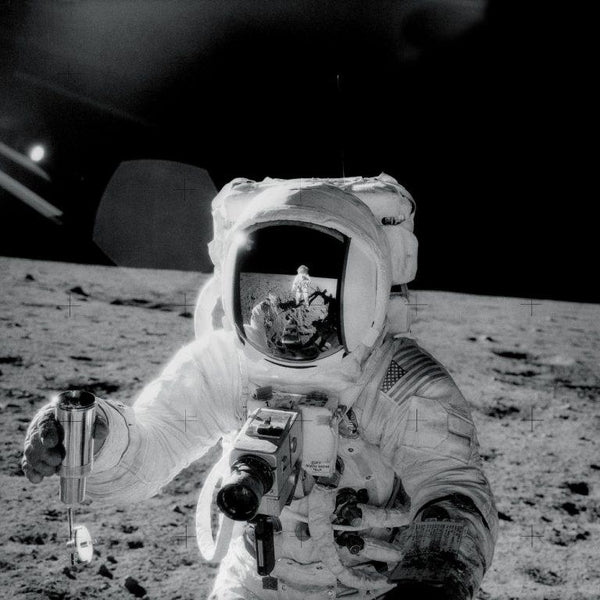
One of the most famous iconic watches in the world is surely the Omega Speedmaster Professional. It earned lasting fame as the "Moonwatch": when Edwin "Buzz" Aldrin set foot on Earth's satellite during the first crewed Moon landing, this very model was strapped to his wrist.
The original model of this still-running line was launched back in 1957 and won over not only countless pilots, motorsport enthusiasts, and other buyers with a soft spot for sporty chronographs, but above all the procurement team at the U.S. space agency NASA.
In the 1960s, NASA was looking for watches to accompany its astronauts on crewed space missions – watches that would have to withstand correspondingly extreme stresses.

After extensive testing, the choice fell on the Speedmaster Professional, which proved itself superbly in practical use. A good decade later, this Omega once again beat out its competitors in a new NASA tender and thus remained NASA's official astronaut watch. And if you're not floating through orbit but keeping your feet firmly on the ground, you can still enjoy an Omega watch that has already proven its reliability under extreme conditions and whose timeless design continues to set the standard today.
Rolex Cosmograph Daytona – From Shelf Warmer to Cult Classic
Iconic watches aren't always born with their special status – sometimes they acquire it in a roundabout way, as the Rolex Cosmograph Daytona shows. Today, collectors sometimes pay more than €100,000 for a well-preserved early Daytona, yet in the first years after its launch, hardly anyone would have expected such prices. The sports chronograph, named after what was then a famous racetrack in Florida, initially sold poorly. Some pieces sat at dealers for years before a buyer finally came along. Only when the model was spotted more and more often on the wrists of celebrities did demand pick up noticeably.


Probably the most famous Daytona wearer – and the person most responsible for its cult status today – was Paul Newman. The American was not only a successful actor but also a passionate motorsport enthusiast who raced successfully himself and for a time even ran his own racing team. His interest in the Rolex Daytona was certainly not just a matter of style, since this model had been designed specifically for the needs of racing drivers.
It measures intervals of up to twelve hours and features a 30-minute counter as well as a central seconds hand.
To calculate average speeds on the track, the Daytona also has an engraved tachymeter scale on the bezel.
Monaco – TAG Heuer's Iconic Watch
The TAG Heuer Monaco is another of the motorsport-inspired icons of the 1960s and early 1970s. It was first presented to the public in 1969 and is considered the first watch with a water-resistant square case. Its striking case shape alone gave the TAG Heuer Monaco instant recognition from the start. It was also one of the first self-winding chronographs ever made.

The Monaco owes its fame primarily to the fact that Steve McQueen wore one on his wrist in the 1970 racing film "Le Mans." To this day, the model continues to delight watch fans who appreciate iconic pieces with a subtle retro design, year after year.
Hublot Big Bang: An International Breakthrough with an Icon
Hublot watches can usually be told apart from other brands' products at first glance. That's mainly thanks to their avant-garde design and often unusual combinations of materials. The brand's main contribution to the exclusive circle of international icons is the Big Bang – despite, or perhaps precisely because of, its enormous range of variations.


Whether in white or black, steel or gold, covered in diamonds or skeletonized – this model is always recognizable by its perfectly round case, the distinctive screws on the bezel, and its characteristic lugs. Though certainly an acquired taste for lovers of classic watch design, the Hublot Big Bang clearly struck a chord with a predominantly younger luxury clientele and quickly became one of the brand's bestsellers. Hublot's international breakthrough is inextricably linked to 2005, the year the Big Bang was launched.
Fortis B-42: Swiss-Made Icons and the Russian Counterpart to the "Moonwatch"
The Swiss watch manufacture Fortis, based in Grenchen, is one of the relatively few renowned watchmakers that have produced watches continuously since their founding.
The brand has made a name for itself above all as a maker of pilot's watches and space watches.
As early as 1962, the manufacture's watchmakers developed the Spacematic Automatik space watch, which kept running steadily even under extreme conditions and sharp temperature swings. It is above all the Fortis B-42 space model that has achieved cult status, now serving as the Russian counterpart to the American astronauts' "Moonwatch."


Fortis has been the official supplier to the Russian "Yuri Gagarin" Cosmonaut Training Center since 1994, and in 1997 the B-42 was first worn by cosmonauts aboard the Mir space station as the "Official Cosmonauts Chronograph."