« The Language of Watch Lovers »
Beveling edges, engraving guilloché dials, crafting hands by hand – this is, at times, what fine watchmaking is all about. It is where human creativity, passion, and dedication show their noblest side. Here you will learn what the many technical terms from the world of luxury watches mean!


What defines luxury watches and makes them special? Above all, it is the fine details that turn an ordinary timekeeper into an extraordinary watch. These include mechanical refinements, small and grand complications, but also particularly beautiful compositions. Luxury watches don't just carry their beauty on the inside, where the delicate movement ticks away – they also reveal themselves through visual details. These may include a guilloché dial, perlage, Geneva stripes, or skeletonization. If you're not sure exactly what these terms mean, here they are explained in detail:
Finishing
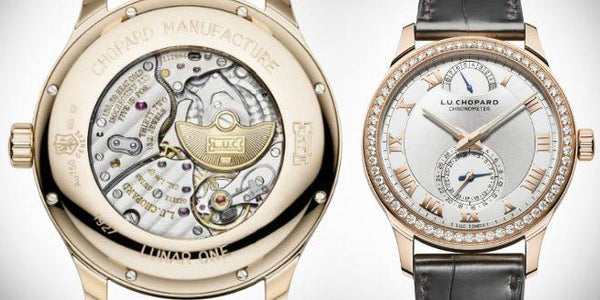
 Every luxury watch is finished to perfection – that is precisely what "finishing" originally means. Finissage is the refinement of the individual parts; that is all the French word denotes. If luxury watches are to receive the Geneva Seal (Poinçon de Genève) as a mark of quality, they must comply with its strict rules. With luxury watches, what matters is the outstanding treatment of every surface. These are worked, for example, with special finishing techniques such as Geneva stripes, perlage, and sunburst finishing. Embossing, chasing, and engraving such as guilloché are also common in luxury watches, as is anglage – the term for the fine removal of all burrs. Last but not least, gilding, chatons, blued screws, and rhodium plating are among the fine features that can set luxury watches apart from ordinary ones.
Guilloché
 When geometric patterns made of extremely fine lines are engraved into the dial or case of a watch, the process is called guilloché. The tool used to cut the fine lines into the workpiece is guided by a steady hand. Depending on how the light strikes the watch, the surface shimmers differently. A French mechanic and goldsmith named Guillot is said to have invented the process, though the name may also derive from the French term for the tool used. Hans Schwanhardt, who lived until 1621 and worked as a craftsman in Nuremberg, also used this technique. Originally, securities were decorated with guilloché patterns to make them harder to counterfeit, but the ornamentation was also common on pocket watch covers, thimbles, boxes, and cups. Peter Carl Fabergé in particular made use of this delicate technique, decorating his famous jeweled eggs with it in his workshop in St. Petersburg. Until well into the middle of the last century, guilloché was an almost forgotten technique – only with the renaissance of luxury watches did it flourish again. The master who has command of this technique passes his knowledge on to his successor stroke by stroke before retiring after a well-earned career. Guillochéing a single dial alone can take hours or even days, depending on the hardness of the material being worked. Since silver and gold are considerably softer than platinum, they are easier to work. Even so, this technique requires more than just a steady hand: if a single cut goes astray, the guillocheur has to start over. So it's no wonder that only the makers of genuine luxury watches dare to take on this endeavor.
 Perlage
The circles typical of perlage look like little clouds: in traditional perlage, overlapping circular grains are applied that blend into one another and thus take on a pearl-like appearance. The mainplate or a bridge, for example, is positioned by hand in exactly the right spot, and special diamond dust does the grinding. The spacing and depth of the resulting "pearls" require an absolutely precise touch and a keen eye. Whereas this technique was once used to polish out minor irregularities, today it serves as a decorative expression of watchmaking skill. The tiny circles not only lie closely on top of one another but even partially cover each other. So that all components of a watch can still be replaced at a later date, the patterns must be executed perfectly and all surfaces finished evenly. The pattern is carried across all components.
 Geneva Stripes
All flat parts of a high-quality movement are decorated. This may be done with the perlage described above, which – for all its sophistication – is still one of the simpler decorations, with its tightly spaced and partially overlapping circles. Other decorative finishes include sunburst and spiral finishing. Geneva stripes are also among the fine embellishments of luxury watches. These are wavy yet parallel lines that make light refract in a very special way, creating a wide range of reflections. As with other finishes, this calls for the assured skill and steady hand of a master. Geneva stripes are capable of trapping even the tiniest specks of dust – so they are not only beautiful but also useful. In addition, these finishes remove any remaining traces of the manufacturing process.
Skeletonization
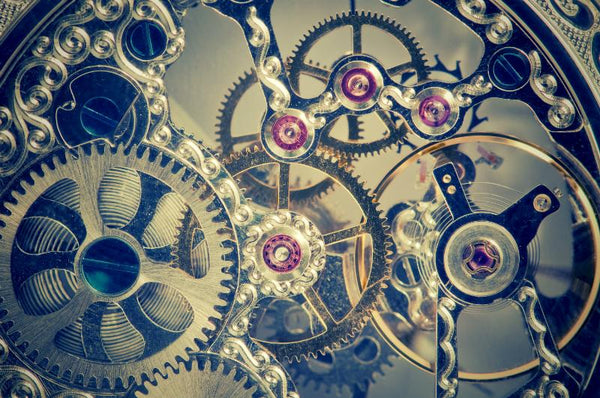
 Mechanical luxury watches consist of countless small components: mainspring, wheels, rotor, balance wheel, lever escapement, and hands. When additional complications such as an alarm, a stopwatch, or a date display are added, there are ever more tiny parts meshing together with incredible perfection. If you want to see how delicate the inside of a watch is and how its parts move, choose a skeleton watch – a watch in which parts of the movement are cut away to reveal the components behind them. Up to eighty percent of the material normally found in a watch is removed, and all remaining parts of the movement are artfully decorated to further emphasize their fragile beauty. Skeletonization turns luxury watches into wonderfully aesthetic masterpieces that make the high art of haute horlogerie visible. Worldwide, there are only a few master watchmakers who have mastered skeletonization in all its painstaking technique. After all, with luxury watches it's not only about perfect looks but also about accuracy. Removing even a fraction of a millimeter too much material can seriously impair their precision. Today there is a whole range of timepieces from luxury manufactures that are either partially or fully skeletonized. In these, you can clearly see how intricately and precisely everything must mesh and interlock for them to always show the correct time. Even for experienced master watchmakers, skeletonization represents the pinnacle of their craft. Every part, however small, is made just as carefully and precisely as the next and will be visible to the wearer. That is why only the finest watchmakers offer watches crafted this way, reflecting the high art of haute horlogerie.
Finishing Turns a Watch into a Truly Special Luxury Object
In principle, you could say that with carefully chosen finishing applied by hand, a standard movement can become a true masterpiece that makes the eyes of luxury watch lovers light up. Since there are only a few masters who command these crafts so perfectly that true art results, such watches are correspondingly rare and, depending on the execution, come at a relatively high price. After all, no machine in the world can replace the experience of a highly gifted master craftsman.