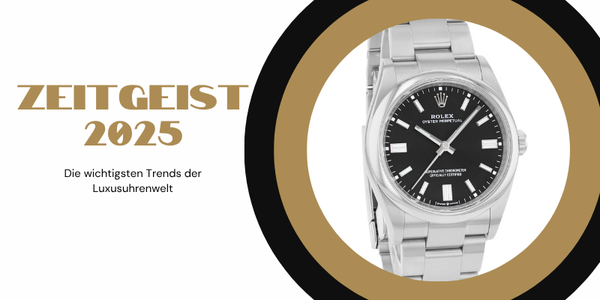
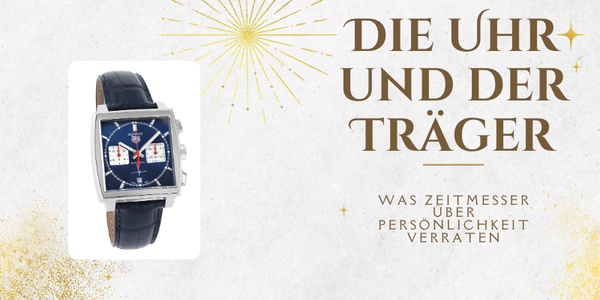
How fine watchmaking holds its ground in the 21st century between craftsmanship, innovation, and digital trends.
The Watch as Cultural Heritage: More Than Just a Timekeeper
In a world where smartphones display the time down to the second, the mechanical watch remains a symbol of permanence. It is not an everyday tool but an expression of history, identity, and craftsmanship.
Its fascination lies in its mechanics: gears, hairsprings, bridges – finely tuned into a harmonious whole. In an era of artificial intelligence and smart devices, the analog watch becomes the counterpoint: a symbol of slowing down.


The Rolex Submariner and the Tudor Black Bay 58 are more than icons – they embody what mechanical precision means on an emotional level: reliability, character, and an awareness of time.
Innovation Inside: New Materials, New Precision
Even the most storied brands aren't resting on their past. Technical progress reached haute horlogerie long ago, in the form of silicon hairsprings, ceramic cases, titanium alloys, and higher-performance calibers.


-
Tudor Pelagos FXD: titanium as a modern tool-watch material – lightweight, rugged, uncompromising.
-
Longines Spirit Flyback Chronograph: a traditional pilot's watch with a high-precision flyback movement.
-
Hublot Big Bang Integral Grey Ceramic: cutting-edge materials, classic recognizability.
The combination of high-tech materials and classic mechanics creates what will shape the future of watchmaking: progress in the service of tradition.
Sustainability and Longevity as the New Technology
Today, technological progress also means responsibility. More and more manufactures are turning to sustainable processes, recycled materials, and energy efficiency in production.


-
Oris: a pioneer in environmental initiatives, with ocean conservation projects and watches such as the Aquis Upcycle.
-
Chopard Alpine Eagle: crafted from Fairmined gold – a commitment to transparency and ethics.
Sustainability has become the new form of technical excellence: those who master it prove they are ready for the future.
The Role of the Smartwatch: Competitor or Catalyst?
Smartwatches haven't destroyed the watch industry; they've changed it.
While smart devices deliver efficiency and connectivity, mechanical watches offer emotion and timelessness. Many watch enthusiasts today wear both: technology on the left wrist, craftsmanship on the right.
Worth noting: brands like TAG Heuer now combine the two with the TAG Heuer Connected: a smartwatch that translates the codes of luxury into the digital world.

The bottom line: smartwatches satisfy the mind, mechanical watches the heart.
The Future: Emotion Meets Precision
The true progress of the mechanical watch lies not in more functions, but in more meaning.
Today, watches tell stories of origin, of innovation, of conviction.
Future generations of collectors won't ask how accurately a watch runs, but what it stands for. Between tradition and technology, a new aesthetic is emerging: analog on the inside, contemporary in expression.


The Tudor Ranger and the Longines Flagship Heritage embody exactly this new balance: classic in design, modern in thinking.
Timelessness in Transition
The mechanical watch is no relic of the past. It is a cultural counterweight to the fast pace of the digital world.
By embracing technology without losing its soul, it remains relevant as a masterpiece of time in a world that keeps moving faster.